Managing digital identities has become a core part of everyday online life, and password managers play a key role in keeping everything secure and organized. Among these tools, Bitwarden stands out for its simplicity, transparency, and strong security features. One common question users often have is about the bitwarden login username and how it works within the system. Understanding this concept helps users avoid confusion while improving account management and security awareness.
In this guide, you will learn what the bitwarden login username means, how it is used, and the best ways to manage it effectively for a smoother login experience across devices.
Understanding Bitwarden and Its Login Structure
Bitwarden is a secure password manager designed to store credentials, notes, and sensitive data in an encrypted vault. Unlike traditional apps that rely heavily on usernames as the main identity marker, Bitwarden uses your email address as the primary login identifier. This means the bitwarden login username is essentially your registered email rather than a separate username field.
This approach simplifies account access while reducing the risk of username-related security issues. Since emails are unique and widely used for account recovery and communication, they provide a reliable foundation for authentication.
What the Bitwarden Login Username Really Means
When users search for bitwarden login username, they are often looking for clarity about what credential is required to access their vault. In Bitwarden’s system, the “username” does not function as a traditional username like in gaming or social platforms. Instead, your email address serves that role.
This means every time you log in, you use your email along with your master password. The master password is the most important security layer because it encrypts and decrypts your vault data. Without it, even the platform cannot access your stored information.
Understanding this distinction helps avoid login confusion, especially for new users transitioning from other password managers or online services.
Why Bitwarden Uses Email Instead of a Username
The decision to use an email-based login system is intentional and rooted in security and usability. There are several benefits to this approach.
First, it reduces the chance of duplicate identities. Usernames can be repeated or easily guessed, but email addresses are unique. This ensures that every account is distinct.
Second, it simplifies account recovery. If you forget your password or need to reset access, Bitwarden can send recovery instructions directly to your registered email. This makes the process faster and more secure.
Third, it improves user experience. People are already familiar with email-based login systems, so there is no need to remember an additional username.
In the context of bitwarden login username, this means users only need to focus on two essential credentials: their email and master password.
How to Access Your Bitwarden Account
Accessing your Bitwarden account is straightforward once you understand the login structure. You begin by entering the email address associated with your account. This acts as your bitwarden login username. After that, you enter your master password to unlock your vault.
If you are using multi-device access, the same credentials work across desktop applications, browser extensions, and mobile apps. This unified system ensures consistency and reduces login errors.
It is important to ensure that your email is typed correctly during login because even a small mistake can prevent access. Unlike usernames that may allow variations, email-based login requires exact accuracy.
Common Issues Related to Bitwarden Login Username
Many users face minor challenges when trying to log in, especially when they misunderstand the role of the bitwarden login username. One of the most common issues is entering a username instead of an email address. Since Bitwarden does not support separate usernames, this leads to login failure.
Another issue occurs when users forget which email they used during registration. This is common for individuals managing multiple email accounts. In such cases, checking saved browser autofill data or password manager records can help identify the correct email.
Occasionally, login problems may also be caused by typing errors, outdated app versions, or incorrect password entries. Ensuring that the app or browser extension is updated can resolve many of these issues.
Managing Your Bitwarden Login Credentials Safely
Proper management of your login credentials is essential for maintaining account security. Since your bitwarden login username is tied to your email, protecting your email account becomes just as important as securing your master password.
It is recommended to use a strong and unique master password that is not reused anywhere else. This ensures that even if another account is compromised, your Bitwarden vault remains secure.
You should also enable two-factor authentication. This adds an extra layer of protection by requiring a secondary verification step during login. Even if someone knows your email and password, they will not be able to access your vault without the second factor.
Best Practices for a Smooth Login Experience
Maintaining a smooth login experience with Bitwarden requires a few simple habits. Always double-check your email before logging in, especially if you manage multiple accounts. Keeping your credentials stored securely in a trusted location can also reduce login friction.
Avoid relying solely on memory for your master password. Instead, store it in a secure offline backup if necessary. Regularly updating your Bitwarden app ensures compatibility and reduces unexpected login issues.
Another helpful practice is organizing your email inbox to easily locate Bitwarden-related messages such as verification emails or security alerts. This becomes especially useful when troubleshooting login issues.
Understanding Security Behind Bitwarden Login System
The security model behind Bitwarden is designed with zero-knowledge encryption. This means your data is encrypted on your device before it is stored on servers. Even Bitwarden itself cannot view your stored passwords or personal information.
In this system, the bitwarden login username plays only a small role in identity verification. The real security lies in your master password and encryption keys. This architecture ensures that even if servers are compromised, your vault remains protected.
This design is one of the key reasons why Bitwarden is trusted by individuals and organizations worldwide.
Using Bitwarden Across Multiple Devices
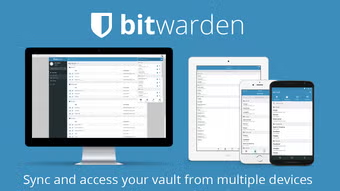
One of the advantages of Bitwarden is seamless synchronization across devices. Whether you are logging in from a laptop, mobile phone, or browser extension, your bitwarden login username remains the same email-based identity.
Once you log in on a new device, your vault syncs automatically. This ensures that all saved passwords, notes, and secure entries are available instantly. It also reduces the need for manual data transfer or repeated setup.
This cross-platform compatibility makes Bitwarden a practical solution for users who frequently switch between devices during daily work or personal tasks.
Final Thoughts on Bitwarden Login Username
Understanding the concept of bitwarden login username helps users avoid confusion and improves overall account management. Since Bitwarden uses an email-based login system, there is no separate username to remember. This simplifies access while enhancing security.
By focusing on strong password practices, enabling additional security layers, and maintaining awareness of your login credentials, you can ensure a smooth and secure experience with Bitwarden. As digital security continues to grow in importance, tools like Bitwarden make it easier to stay protected without sacrificing convenience.
Leave a Reply